
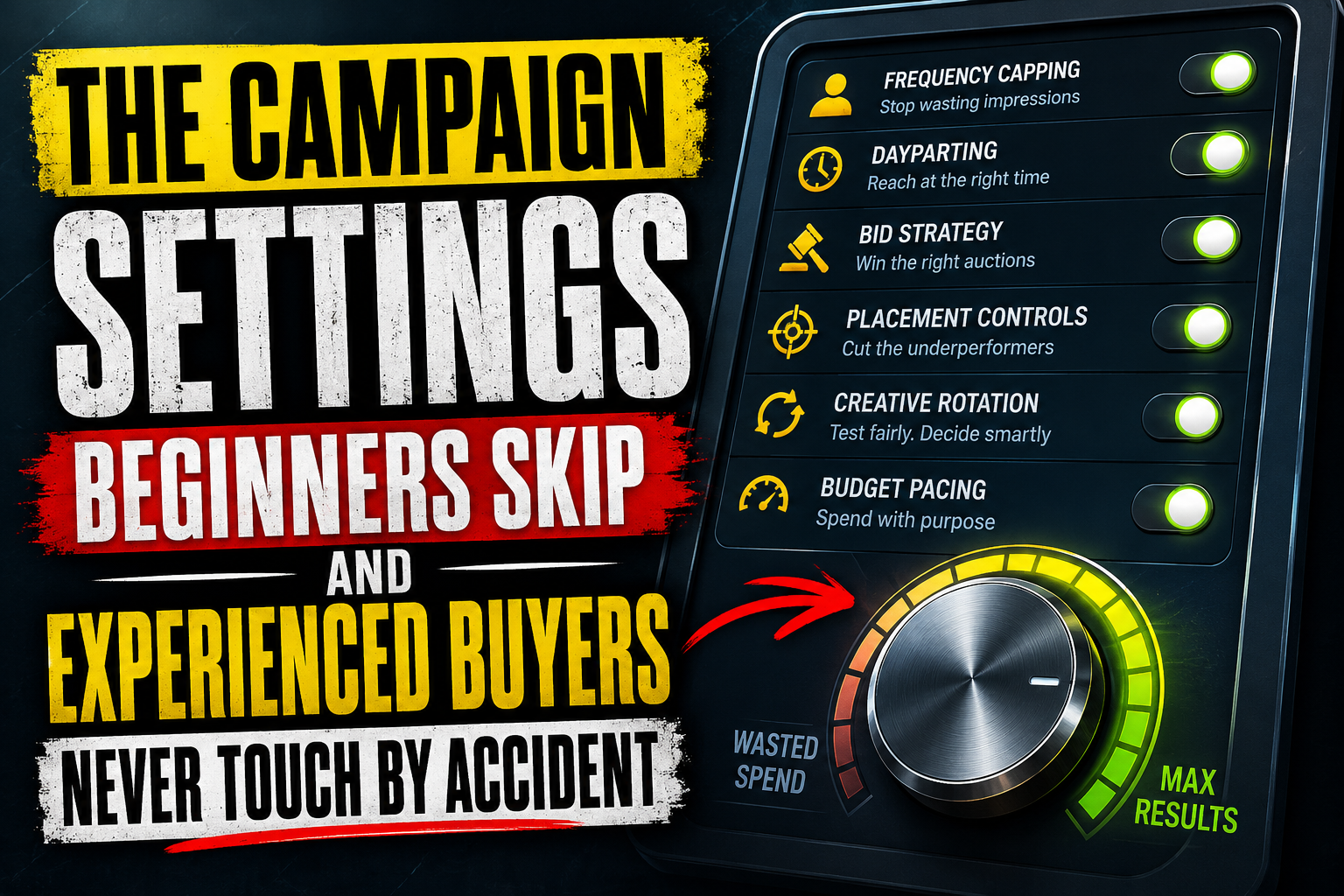
Most first campaigns are launched with the important settings at their defaults, because the defaults are designed to let a campaign start rather than to let it succeed. Each one is a decision someone else made on your behalf.
These are the seven that matter most.
1. Daily cap
The setting that decides whether a mistake costs a day or a week. Set it before launch on every campaign, without exception, and treat a missing cap as a launch blocker.
2. Frequency capping
How many times the same user sees your ad. Left open, a small audience sees your creative repeatedly, which burns it out early and inflates impressions without adding reach.
3. Subscriber or audience age
On formats built around a subscriber base, newer subscribers behave very differently from older ones. Mixing them makes results unreadable and hides the segment that is actually working.
4. Device, OS and browser targeting
Cheap to set and frequently decisive. An offer that only works on one platform will look like a failing offer if the campaign is buying every platform at once.
5. Connection type
Relevant wherever a heavy landing page is involved. Buying traffic that cannot load your page is a purely self inflicted loss and one of the easiest to prevent.
6. Tracking parameters
Not optional. Every source uses its own tokens for placement, creative and campaign, and getting them wrong produces empty columns rather than an error message. Test one click through the full path before spending.
7. Automatic rules
Cutting placements that spend past a threshold without converting. This is the setting that does the most work while you are not watching, and the one beginners reach for last.
Where these settings live
They vary by source but the categories do not, which is what makes the knowledge transferable. Mondiad’s comparison of push ad networks is a useful frame for evaluating a source on exactly this basis, since how much control a platform gives you matters more over time than the headline price.
The settings experienced buyers do not touch mid campaign
There is a second category worth naming: settings that are correct to set before launch and wrong to change while a test is running.
Bid, targeting and creative set all belong here. Changing any of them mid test restarts the clock on the data and produces a result that describes neither the old setup nor the new one.
The rule is simple. Before launch, set everything deliberately. During the test, change nothing except cutting placements that are clearly failing. After the test, change one thing.
The order to work through before launch
Cap, tracking test, targeting, frequency, rules, then bid. Bid last, because the right bid depends on everything above it.
The budget that all of this sits inside is covered in how to set a realistic budget for your first paid campaigns.
And the standard those settings are ultimately judged against is in cheap traffic and profitable traffic are not the same thing.
FAQ
Which campaign setting matters most? The daily cap, because it limits the cost of every other mistake.
Should you change the bid during a test? No. Changing the bid mid test restarts the data and produces results that describe neither configuration.
What is frequency capping for? Limiting how often the same person sees your ad, which slows creative fatigue and stops a small audience absorbing your whole budget.
Are automatic rules worth using early? Yes, for one thing specifically: cutting placements that spend past a threshold with no conversions. Automating anything more complex before you have made the decision manually is premature.