
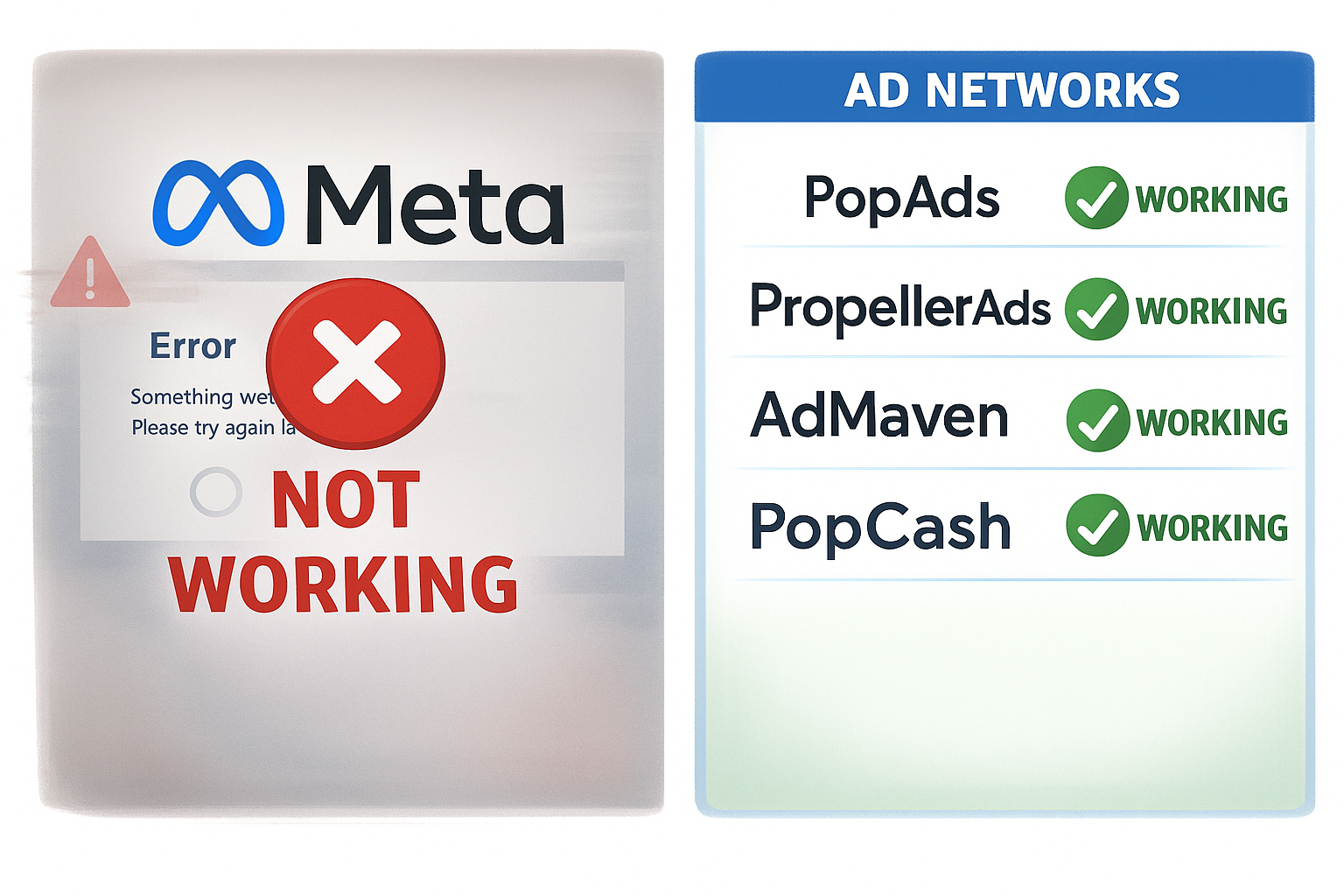
Many advertisers have noticed rising CPMs, unstable results, and more limited targeting options since the platform tightened policies and privacy rules. While Meta is still a powerful channel, relying on it alone can put your campaigns at risk. The good news? There is an entire ecosystem of alternative ad networks that can diversify your traffic sources, lower costs, and open access to completely new audiences.
Why Meta Performance Has Declined for Some Advertisers
Over the past few years, Meta’s advertising landscape has changed dramatically. Competition has increased, especially in saturated verticals like e-commerce, finance, and lead generation. As more brands fight for the same placements, costs naturally rise.
Privacy updates such as Apple’s ATT also limited Meta’s ability to track user behavior, making optimization less accurate. This translates into weaker targeting, more expensive conversion events, and lower-quality leads in some niches.
Add account restrictions, unpredictable reviews, and frequent disapprovals, and it is clear why many advertisers are exploring alternatives.
The Case for Trying Ad Networks
Ad networks offer something Meta cannot, which is variety. Instead of being tied to one platform, you can access multiple traffic sources, for example, push notifications, native placements, pop ads, in-app inventory, or direct publishers. This flexibility lets you test different user behaviors and formats to uncover new winning angles.
Another major benefit is cost efficiency. CPMs and CPCs on many ad networks are significantly lower, making it easier to scale or test campaigns without burning your budget. For performance marketers, affiliate marketers, and lead gen advertisers, this can be a game changer.
Finally, ad networks typically offer more relaxed policies compared to Meta, giving you creative freedom and fewer unexpected bans.
Top Types of Ad Networks Worth Testing
1. Native Ad Networks
Platforms like Taboola, MGID, or Outbrain deliver ads seamlessly integrated into publishers’ content. These networks excel for storytelling ads, advertorials, long-form funnels, and high-intent audiences. Native is especially strong for finance, health, and e-commerce verticals.
2. Push Notification Networks
Push ads through networks like PropellerAds, RichAds or Mondiad are affordable, high-volume, and great for fast testing. They work well for sweepstakes, utility apps, dating, and simple funnels where clicks matter more than deep targeting.
3. Pop & Redirect Networks
These networks, such as Clickadilla, HilltopAds or PopCash provide some of the lowest CPMs on the market. While pops are intrusive, they deliver massive scale for verticals like downloads, software tools, VPNs, or utilities. With the right landing page, the ROI can be surprisingly strong.
4. In-App Advertising Networks
Networks such as Unity Ads or AppLovin offer placements inside mobile apps, where users spend most of their time. These are ideal for gaming offers, app installs, and mobile-first funnels.
5. Programmatic & DSP Platforms
Demand-side platforms let you buy traffic across thousands of publisher sites using advanced targeting. They offer Meta-like optimization at a fraction of the restrictions, making them great for scaling stable campaigns.
How Ad Networks Can Boost Your Results
By testing alternative networks, you unlock new audiences and lower your dependency on a single ecosystem. You can spread risk, reduce acquisition costs, and find channels that reward creativity rather than punish it with strict policies.

Even better, many advertisers discover that combining Meta with ad networks drives the best ROI, Meta becomes a premium audience source, while networks deliver scalable, cost-effective traffic.
If Meta is no longer giving you predictable performance, branching out is not just an option, but a smart strategic move.